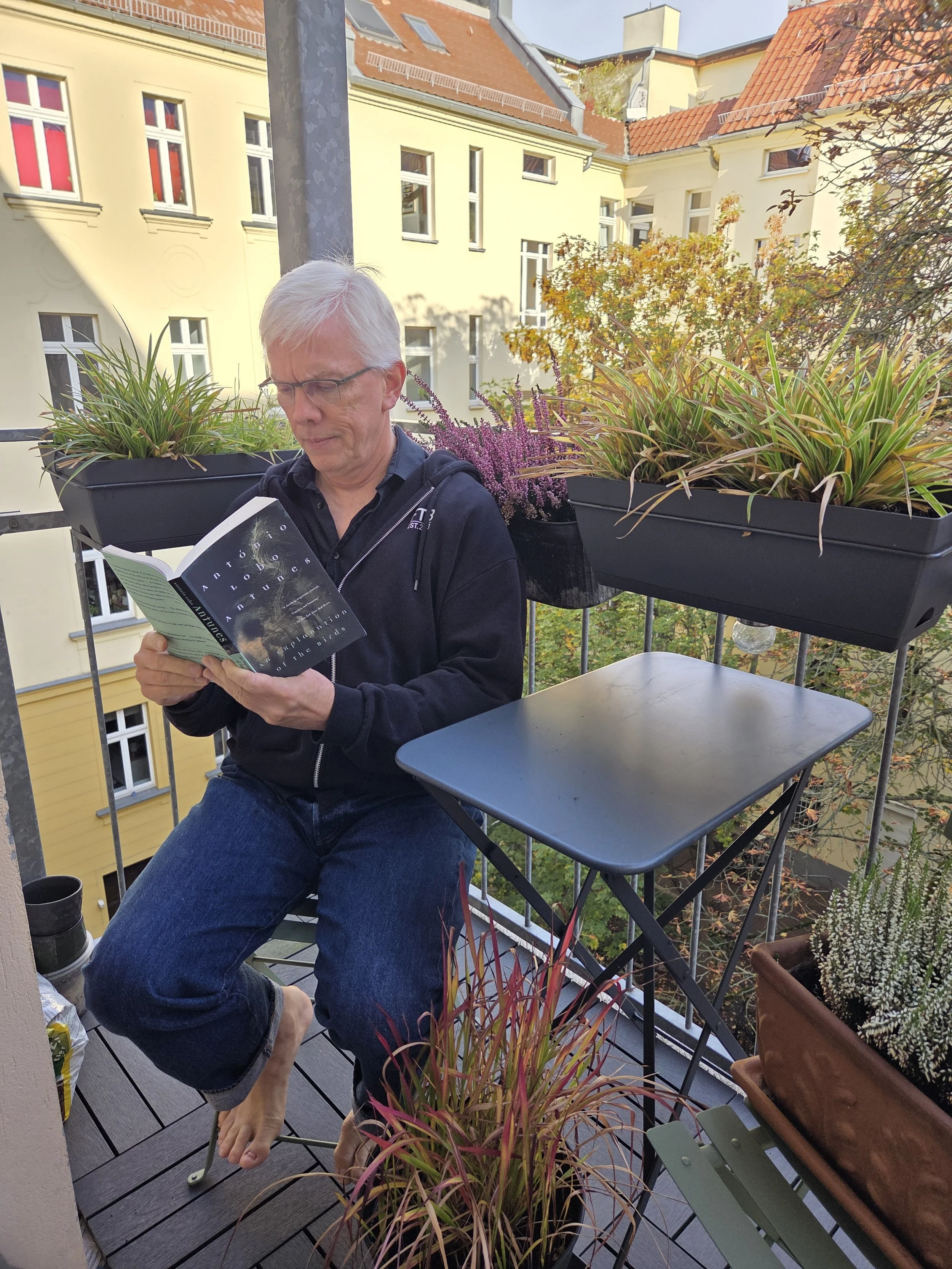
· The Natural Order of Things, Antonio Lobo Antunes, translated by Richard Zenith. Another great stream of consciousness novel from Antunes, this time about two families falling apart in a crumbling Portugal. I love the labyrinth Antunes builds with his prose, how the confused relation between the characters slowly unfolds, and how we rapidly jump between the thoughts of different characters. Always a challenge but always rewarding.
· Buddha, Socrates, and Us: Ethical Living in Uncertain Times, Stephen Batchelor. An interesting nonfiction book that explores the similarities and differences in the teachings of Buddha and Socrates. Well thought out explanations and investigations addressing how the teachings of the two men could aid us in living an ethical life. Considering how radically uncertain things are today I’m not sure I left with any immediate steps I could take in that direction, but still, good to be reacquainted with their line of thinking.
· The Sanity Inspectors, Friedrich Deich, translated by Robert Kee. I thoroughly enjoyed this novel published by Boiler House Press. Sinclair McKay asks in his introduction ‘When an entire society is in the grip of a murderous set of beliefs, how might individuals retain their own moral foundations?’ He was setting up the background for The Sanity Inspectors but it is a question I ask myself on a regular basis about current affairs. And it is the question the protagonist Robert Vossmenge, a German air force psychiatrist in the 30’s and 40’s, struggles with throughout the story. Along the way Vossmenge debates the line between sanity and insanity, the need for compassion to understand others, and the role one should take in opposing oppressive and violent regimes. Truly an illuminating discussion.
· The Pedagogy of the Oppressed, Paulo Freire, translated by Myra Bergman Ramos. The first time I read this book was while getting my undergraduate degree, the second during my years of my master’s degree, and the third this month. A good book to return to often to understand oppression and the role of education in freeing oppressed people. Pertinent today as much as when it was written in the 60’s, it’s like Freire is directly addressing the growing American Oligarchy and the oppressive administration. Great reading!
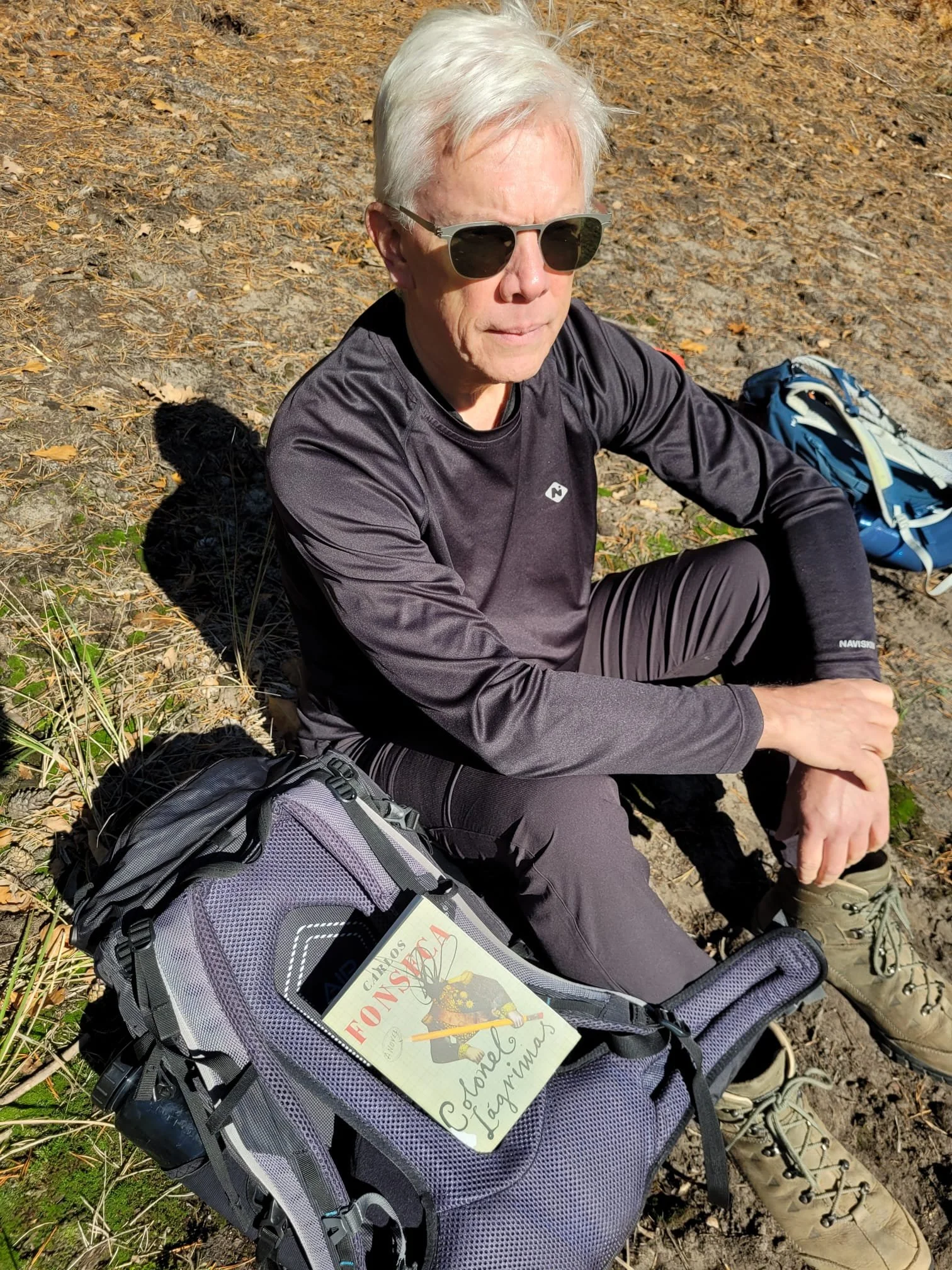
· A Philosophy of Walking, Frédéric Gros, translated by John Howe. I took this book with me on my week-long walk on Germany’s Rennstieg and read it when I was not walking the trail. It is a great accompaniment to a week of slow hiking on a fantastic trail. Because my wife and I were not feeling well we dramatically slowed down our hiking pace and walked some distance apart. I felt exactly what Gros was talking about in his book: feeling embraced by the environment, escaping my identity, clearing my mind, and having nothing to do but put one foot in front of the other. Gros discusses prominent philosophers who incorporated walking into their daily routines along with accompanying thoughts about his own wanderings and a general history of walking. This is a very interesting read with plenty of insightful comments about the idea of walking and what it means to slow down and rebel against speed.
· On Kindness, Adam Phillips and Barbara Taylor. Through historical, philosophical and psychoanalytic investigations Phillips and Taylor offer answers to the question why kindness seems so dangerous. They support the view that contemporary society drives out the natural kindness of children and that kindness is now seen as a weakness. A good primer on kindness
· Wanderlust: A History of Walking, Rebecca Solnit. This was a nice companion read alongside Gros’ book while walking the Rennsteig. Unlike Gros’ focus on long distance walking, Solnit’s is an exhaustive history of walking, from walking in gardens and cities, to pilgrimages and marches. The guiding message of these essays is that walking ‘is a state in which the mind, the body, and the world are aligned.’ But Solnit also gives fair amount of time to the increasing lack of walking in today’s society due in large part to ‘automobilization and suburbanization.’ Not quite as intriguing as Gros’ book but still worth the read.